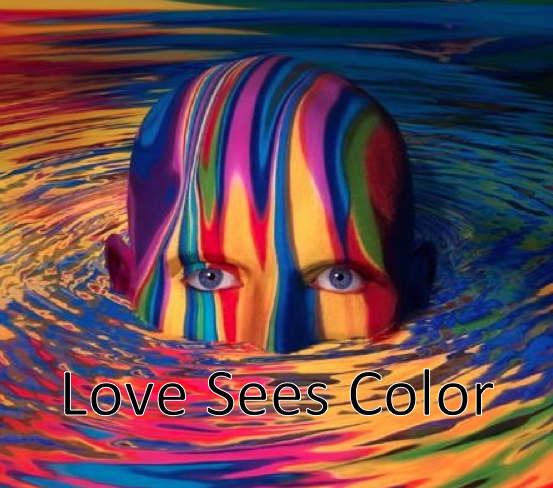
June 17, 2015 changed things for a lot of us, and it changed everything for me.

June 17 is when Dylann Roof went to a Bible study at Mother Emmanuel AME Church, sat and participated for an hour, and then gunned down nine innocent people. Dylann is white; all nine of his victims were black, at least three of them were ministers, and two of them graduated from Lutheran Theological Southern Seminary, which is where I went to seminary. One of the men martyred was Rev. Clementa Pinckney, who was a student there while I was there.
Clem and I didn’t know each other well, he would know me and probably be willing to sit down with me and have a conversation with me if he saw me, but that’s about the extent of it, but the night I learned that he’d been murdered, I was wrecked. The bottom dropped out of my gut the next morning when I learned that Dylann Roof and his family are members of an ELCA congregation near me. It makes me feel better to know that Dylann is estranged, that he doesn’t attend regularly; to see, hear, and feel the genuine shock and utter grief from those in his church home that tells me that church isn’t where he learned his hate, but we’re the whitest Christian denomination in the nation. We may not purposely embody racism and all its evil baggage, but we incarnate the baggage our whiteness carries nonetheless.
And estranged or not, the truth is the truth — we in the South Carolina Synod of the ELCA are doubly connected to this tragedy.
Clem is one of ours, and Dylann murdered him.
Certain media outlets wanted to make this out to be a crime against religion, yet it was clear to me from the beginning — this isn’t about a man with a beef against God, this is a white guy with a chip on his shoulder about black people, who by his own admission wants to start a race war by firing what hopes is the first salvo for white extremists everywhere. So far, thank God, this hasn’t come to pass.

On the other side, we see some amazing things did happen in the wake of this — prayer services that united folks of all races and creeds. People holding hands from end-to-end of the Ravenel Bridge signifies our peculiar resilience in South Carolina, where so many lives have been affected by slavery and racism over the centuries that we can’t even begin to count.
In the midst of this, I kept seeing the hashtag #loveseesnocolor. I’ve never really been a fan of this saying, but couldn’t really explain it until yesterday. Color matters in our society. Even in building this webpage, I thought carefully about what the colors I chose would say to the five-and-a-half folks who will read the articles here.
Color matters.
My color determines my experience of the world, and color determines the way Thomas Washington, who came up with this idea with me, experiences the world, too. When we talk about learning to love each other, we’re talking about a relationship in which we learn to see each other clearly and fully. To see me without the context of my white skin is to see only a portion of who I am. To see Thomas without the context of his brown skin is to see only part of who he is. Love is something that we do with eyes wide open. To ignore color is to deprive a person of their identity. If we sincerely want to love others, it means accepting that the notion of colorblindness isn’t loving because love is the act of honoring a whole person in the context of their full identity.
Love sees color.
 Love Sees Color
I used to say I was colorblind because I wanted folks to know I didn’t care what color they were. However, as I got older, I realized that was not true. You can’t help but see skin color. You are right. It has a lot too do with our life’s experiences. Having lived when there was segregation, I know the color is significant to others. I came up with another phrase that I try to live by and that is that ” I see past the color”. I just don’t stop at the skin. I look deeper into the real person.
I think that’s a great distinction, and certainly a healthy start. A question that comes to my mind (and this is an honest question) is whether color’s something we need to see past. Is the sense that we need to see past it a symptom of seeing one color or another as “normal” and another as “other”?